OSI Model (Open Systems Interconnection Model)
A beginner-friendly guide to the seven layers of network communication and why they matter in cybersecurity.
What is the OSI Model?
Full form: Open Systems Interconnection Model.
The OSI Model is a conceptual reference model developed by the International Organization for Standardization (ISO). It standardizes and describes how different systems communicate over a network. It divides network communication into seven distinct layers, and each layer represents a specific set of networking functions.
Here's what that means in practice. Imagine you have a computer in Sri Lanka and you want to send a message to a friend who has a computer in the United States. Both computers may use different hardware, operating systems, and network technologies, but they still need a common way to communicate.
The OSI Model gives us a structured way to understand how this communication takes place. It breaks the complex process of network communication into seven organized layers. You can think of it as a framework that helps us understand how network communication works.
Why was the OSI Model developed?
Before standardized networking approaches became widespread, different manufacturers developed their own networking technologies and systems. This created interoperability problems:
- Different manufacturers used different networking technologies.
- Systems did not always communicate easily with one another.
- Networking implementations lacked a common reference framework.
- Troubleshooting complex communication problems was difficult.
The OSI Model was developed to provide a standardized reference framework for understanding and designing network communication. Its purpose was to help different systems communicate through standardized networking concepts and protocols.
Important: The OSI Model is a reference model. It is not a networking protocol itself, and real-world networking does not require every system to implement seven separate OSI layers exactly as described.
Who developed the OSI Model?
- Organization: International Organization for Standardization (ISO)
- Development: Work began in the late 1970s
- Standard: ISO 7498
- Publication: The original standard was published in 1984
The model was developed to establish a common reference for open systems interconnection.
Why is the OSI Model important?
There are four particularly important reasons.
1. Understanding network communication
It helps us understand how data travels from one device to another.
2. Standardization
It provides a common reference framework for discussing networking functions and technologies.
3. Interoperability
It helps explain how different networking technologies and systems can work together.
4. Troubleshooting
It allows network engineers and cybersecurity professionals to investigate network problems systematically by considering different areas of communication. For example, if a computer cannot communicate with another computer, an engineer can use the OSI Model as a troubleshooting framework to narrow down where the problem might exist.
What are the seven layers?
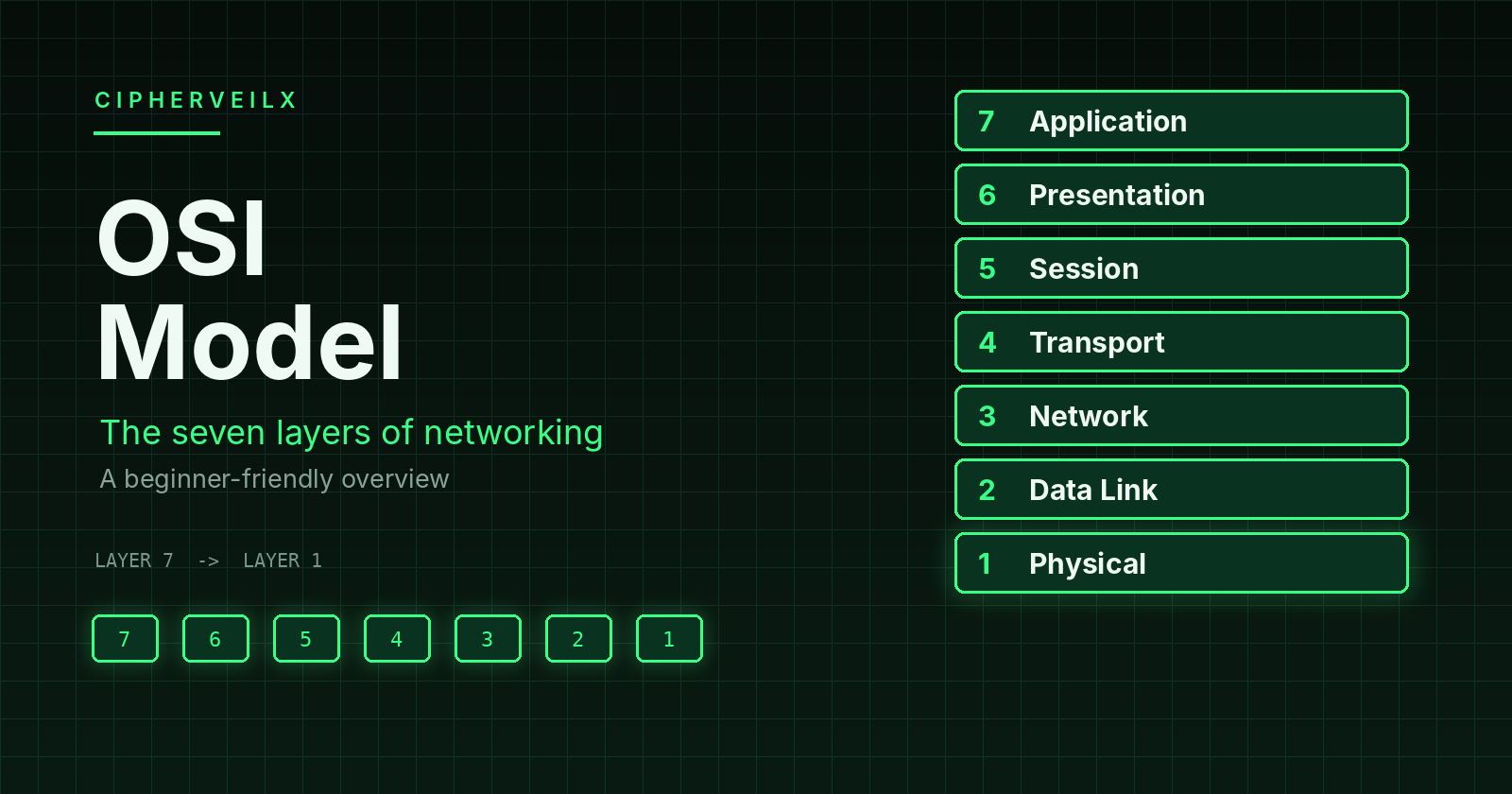
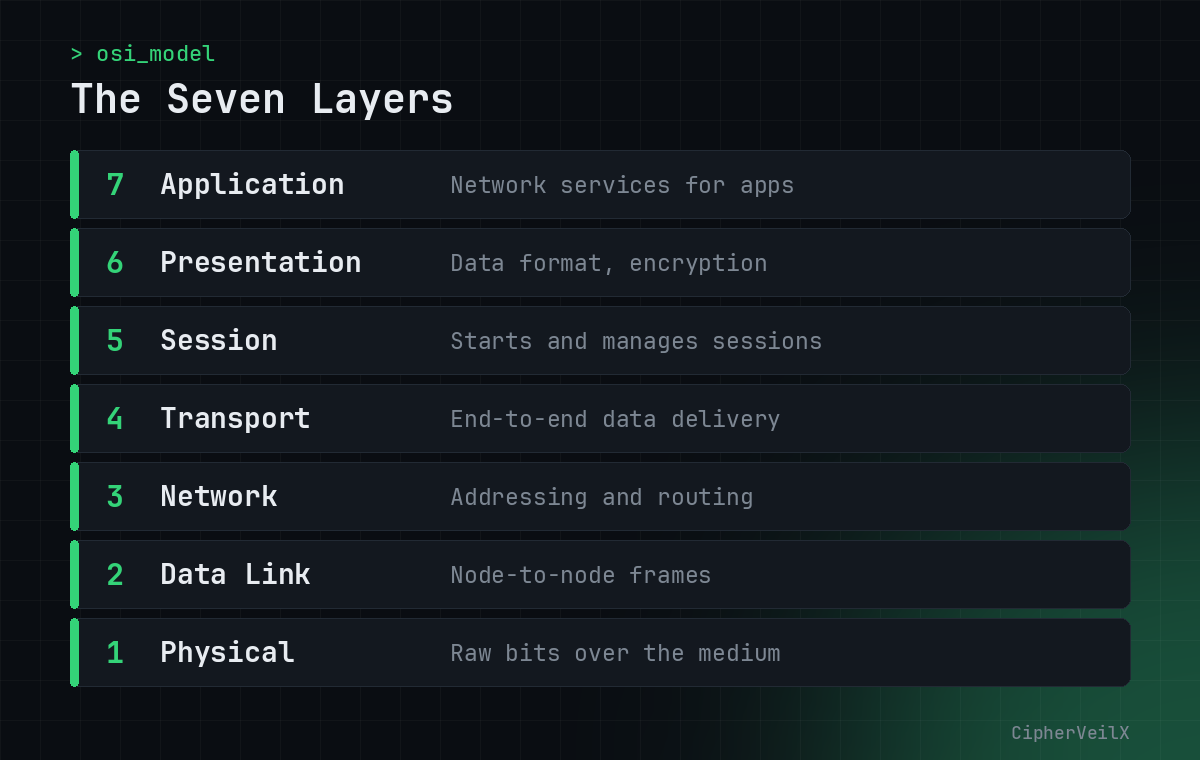
The OSI Model consists of seven layers:
- Layer 7: Application (top layer)
- Layer 6: Presentation
- Layer 5: Session
- Layer 4: Transport
- Layer 3: Network
- Layer 2: Data Link
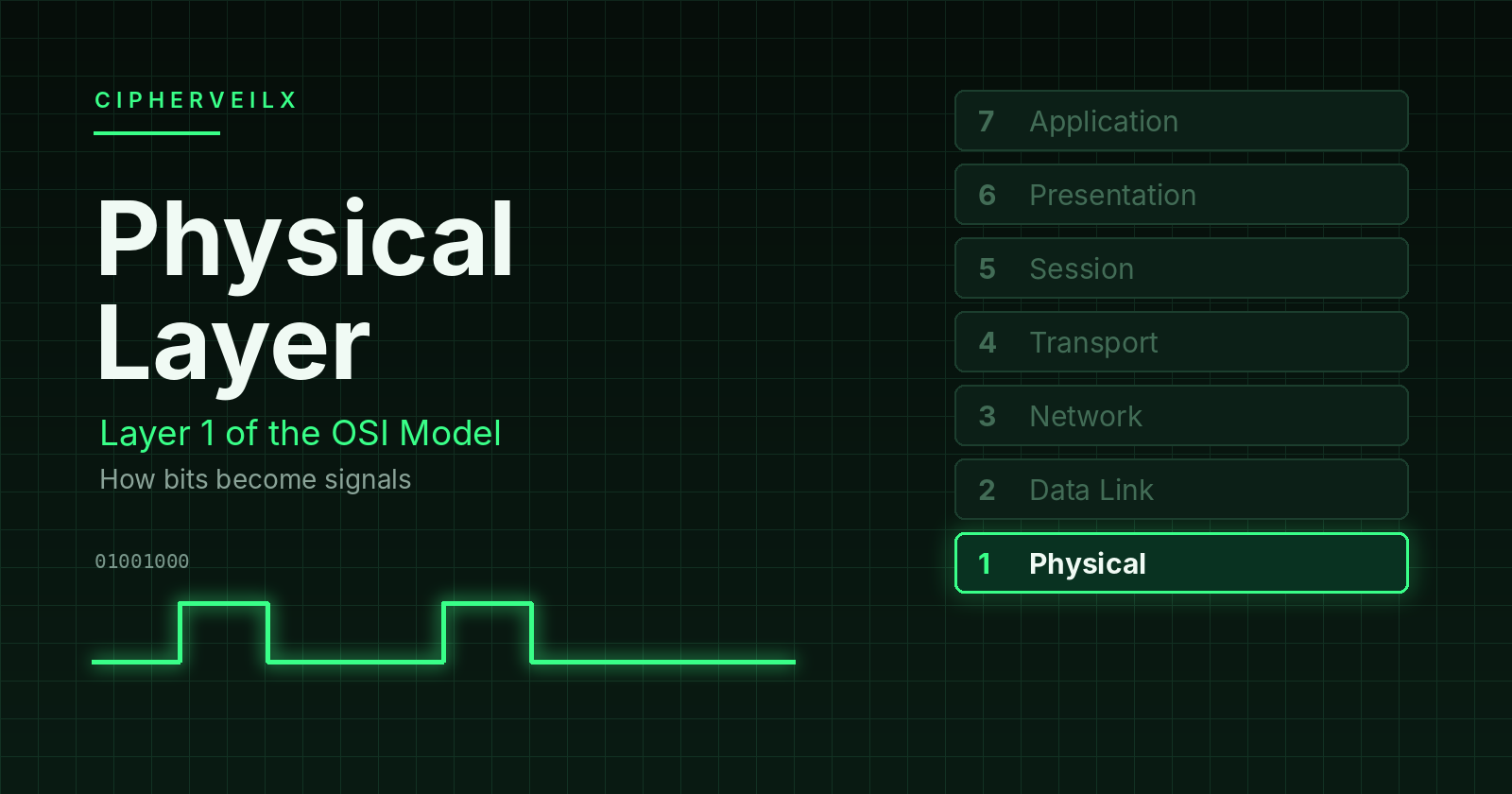
- Layer 1: Physical (bottom layer)
How is the OSI Model used in cybersecurity?
The OSI Model is particularly useful in cybersecurity because network communication is involved in many security incidents. For example:
- Network engineers use it to troubleshoot connectivity problems.
- SOC analysts use it to understand network traffic and investigate suspicious communication.
- Security engineers use it to understand where security controls operate.
- Penetration testers use it to understand different networking technologies and potential attack surfaces.
It provides a common technical language for understanding network communication.
About the author
- I'm a Cybersecurity & Digital Forensics graduate with a strong interest in Security Operations (SOC), network security and digital forensics. My degree gave me a solid grounding in networking, operating systems and security principles, and I'm now building practical skills on top of it through hands-on labs. My interests include security monitoring, threat analysis, incident investigation, network traffic analysis and digital forensic investigations. Through this blog, I document what I learn, break down complex concepts in plain language, and publish write-ups from my labs. I'm always learning, experimenting and deepening my understanding of how technology works and how it can be secured.
Comments
Join the discussionNo comments yet. Be the first to comment.
OSI Model
A beginner-friendly guide to the seven layers of network communication and why they matter in cybersecurity.